
Rail vs. road transport for bulk commodities — when does each option make financial sense
26 August 2026
Choosing the right mode of transport is one of the key cost decisions in trading grains, feed materials, or fertilisers. We examine the numbers and show when rail outperforms road — and when the opposite holds true.
Core differences — what the numbers say
Before moving to practical guidance, a few hard figures.
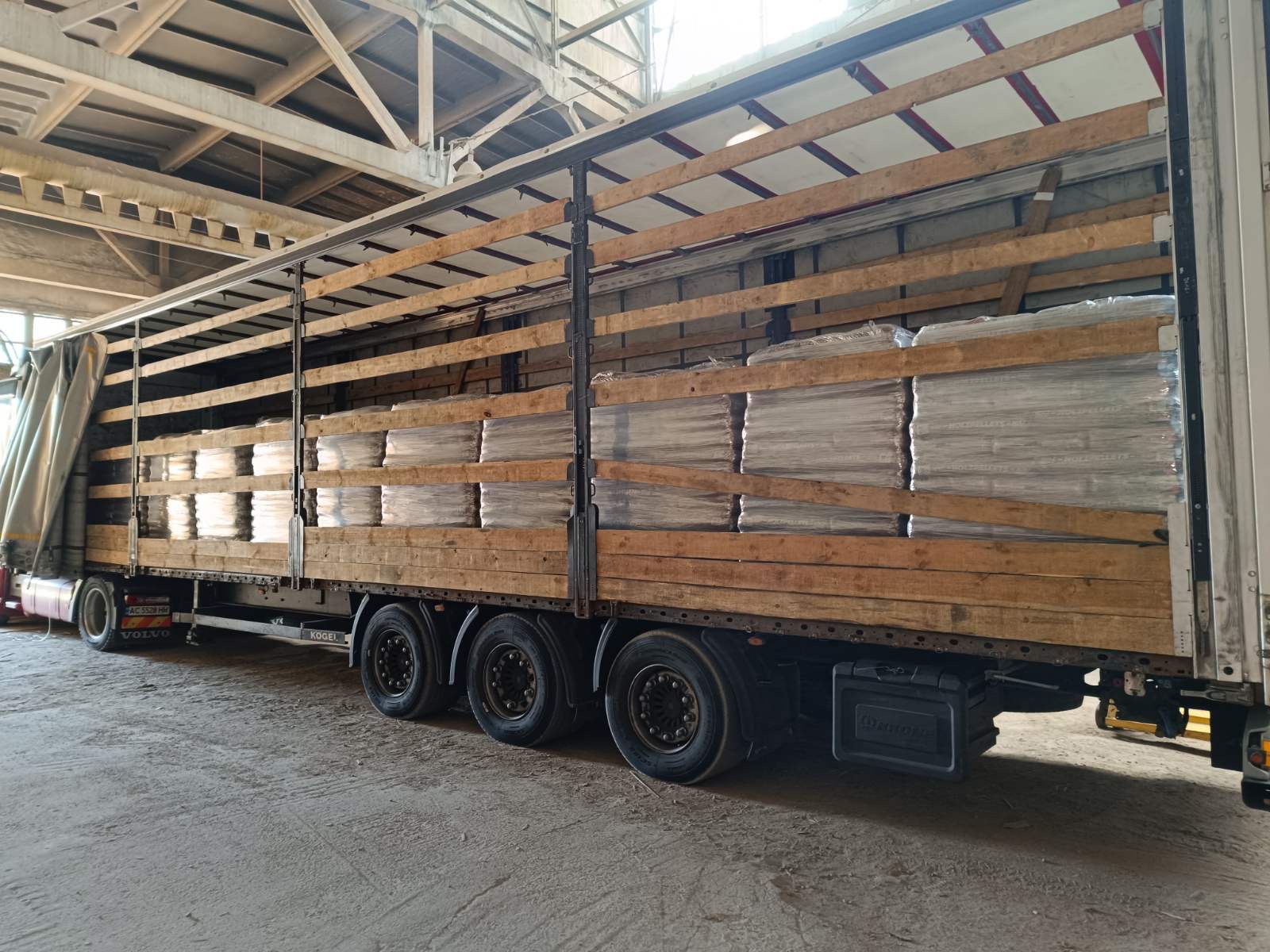
A standard grain wagon (type Tads/Uads) carries 55–68 tonnes of cargo. A typical road combination (tractor unit + moving-floor or tipper semi-trailer) handles 24–27 tonnes net under the axle-load limits permitted on Polish roads.
What about costs? As a general reference:
- Road transport: 4.5–7.5 PLN/tonne/100 km depending on the lane, time of year, and vehicle availability
- Rail transport (wagon): 2.5–4.5 PLN/tonne/100 km on longer hauls, including handling charges
At first glance, rail appears cheaper — and it frequently is, but not always.
When rail is the better choice
1. Large volumes and long hauls
For single shipments exceeding 500–1,000 tonnes over distances above 300–400 km, rail begins to win clearly. Full train consists (e.g. 20–25 wagons) allow freight rates to drop to levels unreachable by road.
2. Ports and rail terminals
Where the consignee or consignor has a private siding, cargo moves ramp to ramp without intermediate transhipment. For exports through Szczecin, Gdynia, or Gdańsk, this is standard practice among larger market participants.
3. Seasonal peaks and vehicle shortages
During harvest or periods of heightened demand — such as autumn movements or spring fertiliser imports — truck availability drops sharply and spot rates rise 20–40% above the seasonal average. In such conditions, rail is often the only viable solution.
4. Bulk commodities with tight margins
When the margin per tonne is narrow — as with feed maize or feed wheat — every 5 PLN difference in freight cost matters. Rail delivers a tangible advantage in these cases.
When road wins
1. Small lots — below a single wagon load
There is little justification for consolidating cargo from several counterparties into one wagon. For lots of 50–200 tonnes, road is more flexible and often cheaper once all costs are accounted for (wagon detention, station fees, transit time).
2. Short and medium distances (up to 200–250 km)
On regional lanes, rail loses its price advantage. Fixed costs accumulate: wagon hire, potential demurrage, shunting movements. A truck moves from point A to point B without unnecessary delays.
3. Consignee without a private siding
Absence of rail infrastructure on the receiving side requires transhipment at a terminal — an additional cost of 15–25 PLN/tonne plus transit time. This frequently eliminates the wagon's advantage entirely.
4. Urgent deliveries and supply chain flexibility
Supply chain continuity is sometimes more important than minimising freight cost. A truck can be booked on 24–48 hours' notice; a wagon requires at least several days of planning and rolling stock availability.
How to calculate — a practical checklist
Before making a decision, it is worth addressing the following questions:
- Volume: how many tonnes and how many shipments per month?
- Distance: below or above 300 km?
- Infrastructure: do both parties have a private siding or terminal access?
- Timing: when must the cargo arrive, and how critical is the schedule?
- Season: are we currently in a peak transport period?
- Commodity: what is the value per tonne and the sensitivity to freight cost?
Only by combining all these factors can a reliable answer be reached — there is no single correct choice that applies to every situation.
Mixed-mode transport — the option that is often overlooked
In practice, many operators use a hybrid model: rail on the main leg (e.g. Ukraine–Szczecin via the border crossing), followed by road distribution to final consignees in the region. This approach combines the low unit cost of bulk rail freight with the flexibility of local last-mile delivery.
---
If you are planning a shipment or import of bulk commodities and would like to compare transport options for your specific lane, you are welcome to contact the ARIA 3A team. We will endeavour to identify the solution that makes financial sense for your situation.
Fill in the form — we reply within 24 hours.
Request a quote